
Bare, Compacted Clay Where Grass Won't Grow? What Western NY Soil Needs
September 28, 2026
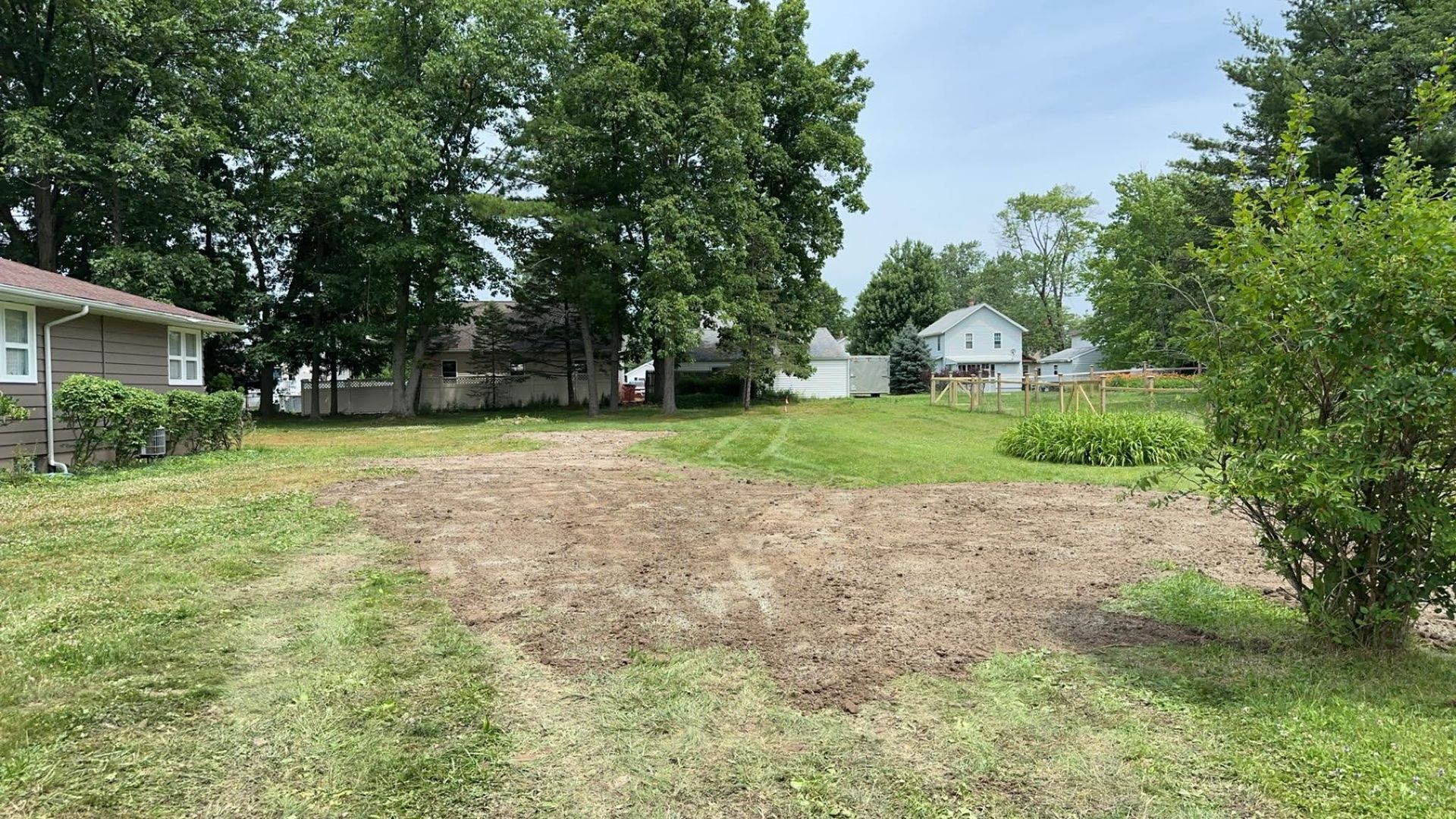
Quick Answer: A bare patch that won't hold grass no matter how much seed goes down usually isn't a seed problem — it's compacted clay soil with no pore space left for roots, air, or water. Much of Western New York sits on heavy clay left behind by glacial lake deposits, and foot traffic, mower passes, and construction equipment press those tight clay particles even closer together over time. Seed dropped on that ground either washes off in the next rain or germinates into a shallow root system that dies back within a season. Correcting it takes core aeration, repeated organic matter added over more than one season, and grass species chosen for the conditions, done in that order before reseeding. Skipping straight to seed on unamended clay is why the same bare spot keeps coming back year after year.
You've reseeded that same spot by the driveway three springs running, and it never fills in. By June it's hard-packed dirt again, cracked at the edges when the weather turns dry, and the grass around it stays thin and pale even though you water it the same as the rest of the lawn. Push a screwdriver into that patch and it barely goes in an inch before it stops. Push it into the lawn ten feet away and it slides in to the handle.
That difference is the whole story.
It isn't a seed brand problem, a watering problem, or bad luck with the weather. It's soil that has lost the structure to support a root system, and no amount of reseeding fixes that on its own.
Why Western New York's Clay Won't Let Grass Root
Much of the ground across Silver Creek, Hamburg, and the towns along the Lake Erie shoreline sits on heavy clay left behind by the glacial lakes that once covered this part of the state. Clay particles are microscopic and pack together far more tightly than the sand and silt found in looser soils, leaving little of the open pore space that roots, air, and water all depend on.
Traffic On The Soil Is The Main Driver Of Compaction
Repeated traffic from mowing wet lawns, children, pets, or parked equipment presses clay particles tightly together. Compacted soil drains poorly, restricts root growth, and causes water to remain on surfaces longer.
Compacted Clay Also Starts With Less Organic Matter To Begin With
Construction and grading projects can strip away topsoil, exposing raw clay subsoil with little organic matter. Without established roots and decomposed clippings, this soil compacts quickly and recovers slowly.
Winter Adds A Layer Most Regions Don't Deal With
Western New York winters bring freeze-thaw cycles, snow removal, foot traffic, and heavy spring rainfall. These conditions repeatedly disturb partially frozen soil, leaving lawns compacted again before April growing conditions begin.
What Compacted Clay Actually Looks Like In Your Yard
Compaction shows up in patterns that are easy to miss if you're only looking at the grass and not the ground underneath it.
Water Sits On The Surface Instead Of Soaking In
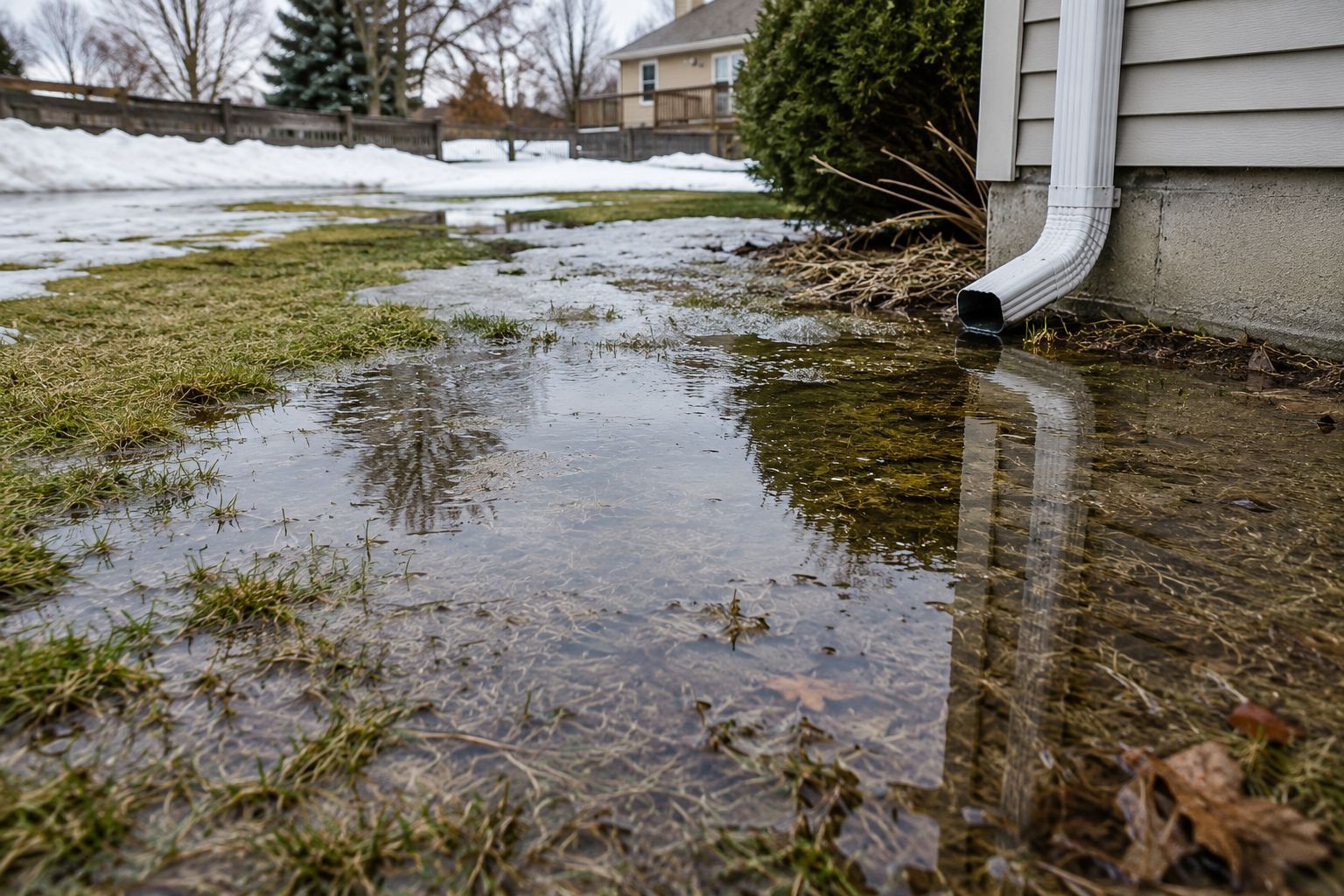
After rainfall, compacted patches often hold standing water or remain slick and muddy while surrounding grass dries. Limited pore space prevents water from moving downward efficiently, revealing poor soil infiltration directly.
The Same Bare Patch Cracks In Dry Weather And Turns To Mud In Wet Weather
Unstructured clay soil swings between extremes, becoming hard and cracked during dry periods, then greasy and waterlogged after rainfall. These conditions leave little workable moisture for healthy turf growth.
Certain Weeds Move In Before Grass Does
Broadleaf plantain, prostrate knotweed, and quackgrass commonly tolerate compacted, oxygen-poor soil. Their presence specifically within bare patches can indicate underlying soil problems rather than ordinary weed pressure affecting the entire lawn.
Grass Roots Stay Shallow Even Where Something Is Growing
Grass growing over compacted soil often develops roots only an inch or two deep instead of three or four inches. Shallow roots dry quickly, increasing summer stress and causing earlier turf decline.
Tip: Push a standard flathead screwdriver straight down into the soil in a few different spots around the yard. In healthy, uncompacted ground it should go in most of the way with hand pressure alone. If it stops after an inch or two, that's compacted soil, and it's worth mapping which parts of the yard test that way before deciding where to focus the fix.
Why Reseeding or Dumping Topsoil Doesn't Fix It
Most of the fixes homeowners try first treat the symptom rather than the soil, which is why the bare patch keeps returning.
Seed needs oxygen at the root zone to germinate and establish, and compacted clay has almost none. Even seed that sprouts on top of hard-packed ground tends to produce a thin, shallow root system that can't compete with weeds or survive a dry stretch, so it thins out again within a season.
A layer of topsoil dumped over compacted clay creates two different soils stacked on top of each other. Water moves through the looser topsoil layer until it hits the dense clay underneath. It doesn't keep going down. It spreads sideways instead, and the new layer often ends up soggier than the bare patch it was meant to cover.
Mixing in sand is one of the most persistent pieces of bad advice for clay soil. Extension horticulture researchers, including work published through Washington State University, have specifically tested and warned against this: combining sand with clay in anything less than a very precise ratio produces a soil structure closer to concrete than to a workable garden soil, because the small clay particles fill in the gaps between sand grains instead of the two materials creating larger pore spaces together.
Warning: Do not add sand to a compacted clay patch expecting it to loosen the soil. Without the exact ratio used in engineered soil mixes, sand and clay combine into a denser, harder material than either one alone, and once that sets up it's far more difficult to correct than the original compaction.
What Actually Corrects Compacted Clay for Good
Fixing clay soil is a sequence, not a single treatment, and skipping steps is why so many attempts don't hold.
Core Aeration Physically Opens The Soil
Core aeration removes small soil plugs, creating channels for air, water, and roots to penetrate compacted layers. Cornell recommends late summer, when lightly moist soil and cooler temperatures reduce turf stress.
Organic Matter Rebuilds Structure, But Only With Repeated Applications
Compost worked into the surface or topdressed after aeration helps clay particles form better structure. Improvement develops gradually, with repeated seasonal applications rather than from one treatment.
The Right Grass Species Handles The Transition Better While The Soil Recovers
Cornell recommends Kentucky bluegrass, perennial ryegrass, and fine fescue blends, or tall fescue, for Western New York. These grasses form dense sod and stronger root mats that tolerate pressure.
Grading Gets Addressed Before Any Of The Above, If Water Is Part Of The Pattern
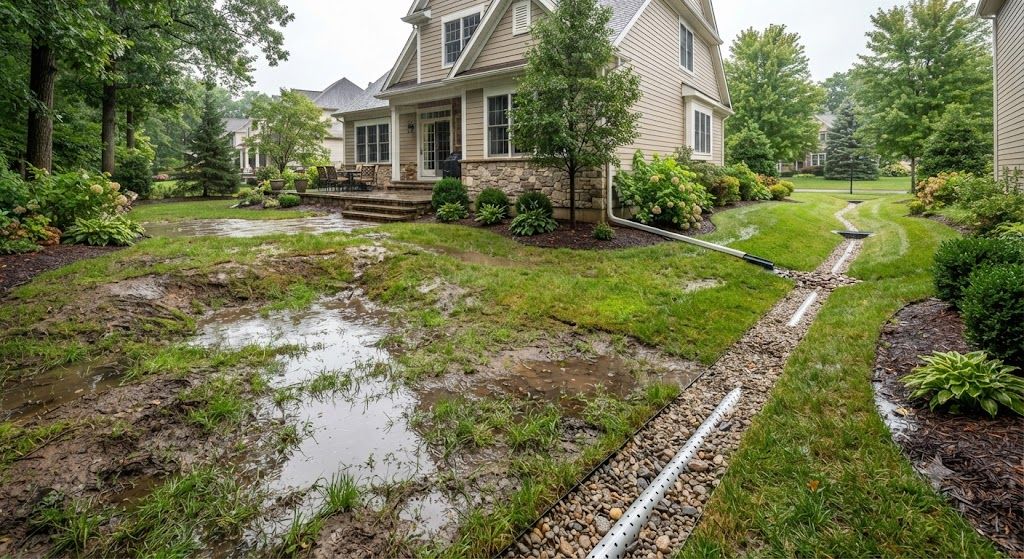
If compacted areas also collect standing water, correct downspout drainage, low spots, or runoff paths first. Otherwise, newly aerated soil can quickly compact again after becoming saturated and heavily trafficked.
Timing the Fix Around a Western New York Growing Season
Assess In Spring Or Early Summer, While The Pattern Is Easy To See
Cracking, standing water, and weed patterns are easiest to spot during wet spring and dry summer shifts, helping identify compacted areas accurately.
Aerate And Amend In Late Summer
Late summer provides an ideal aeration window before seeding, giving soil time to loosen, settle, and absorb organic matter before new grass establishes.
Seed In The Late-Summer To Early-Fall Window
Mid-August through September offers dependable turf establishment in Western New York, with moderated soil temperatures and reduced summer weed competition supporting stronger germination.
But treating this as a multi-season process, not a single weekend project, is what separates a patch that finally fills in from one that's back to bare dirt by the following June. Most homeowners give up after one attempt. The soil just needs more than one.
Frequently Asked Questions
How can I tell if my yard has clay soil without a lab test?
Wet a small handful and roll it between your fingers. Clay forms a long, smooth ribbon while sandy soil crumbles apart. Standing water, dry-spell cracking, and slow drainage all point toward a heavy clay base.
Will one round of aeration fix a badly compacted patch?
A single pass helps but rarely resolves severe, long-standing compaction alone. Soil scientists describe structural improvement in clay as something built across repeated seasons of aeration and organic matter, so packed ground needs several rounds.
Is it worth reseeding a compacted spot before fixing the soil?
Seed on unamended compacted clay usually fails to germinate or grows shallow roots that die back within a season, since the soil has no oxygen or room. Aerating and amending first gives seed a chance.
Why does grass grow fine everywhere except one specific spot in my yard?
An isolated patch usually points to a localized cause: where vehicles park, a worn foot path, a low area collecting water, or ground stripped during construction. A screwdriver test confirms whether compaction is behind it.
Does clay soil in Western New York ever fully stop being a problem?
Clay content itself doesn't disappear, but a well-managed lawn on clay can perform close to one on better-draining soil once organic matter, aeration, and the right grass are established. Clay stops being the limiting factor.
Can I aerate and amend the soil myself, or does this need professional equipment?
Homeowners can rent core aerators and hand-apply compost for smaller areas, working fine for one problem patch. Larger yards, multiple compacted zones, or drainage tied into the same problem call for professional equipment and diagnosis.
When the Ground Is Ready, Grass Follows
A bare patch that keeps returning after every reseeding attempt isn't short on seed. It's short on the structure roots need to reach down and hold. Compacted clay leaves no room for air or water, so grass either washes off in the next rain or roots too shallow to survive a dry stretch. Once the ground underneath opens back up through aeration and steady organic matter, the grass that always struggled on top of it finally has somewhere to grow.
The clay across Silver Creek and the surrounding Lake Erie towns doesn't disappear, but it stops being the limiting factor once the soil around it carries structure again. Braidich Landscaping
has spent 9
years reading this exact kind of Western New York ground, and that experience is what tells the difference between a patch held back by compaction, one held back by drainage, or both at once. The same stubborn dirt can end up matching the rest of the yard.