
Pooling Water and Soggy Spots in Your Buffalo Yard? How Drainage and Grading Fix It
July 4, 2026
Quick Answer: Pooling water and soggy spots in a yard after rain mean water is collecting instead of draining away, almost always because of how the ground is graded and where the water has nowhere to go. The fix is correcting the grade so water flows away from the house and low spots, and adding drainage, such as swales, French drains, or downspout extensions, to carry it off. Reseeding or filling the soggy spot alone won't last; the water has to be redirected and given somewhere to drain.
After every Buffalo rain or spring melt, the same spots in your yard turn into puddles and stay soggy for days, the grass squishing underfoot, maybe water creeping toward the foundation. It is a frustrating, persistent problem, and filling the low spot with soil or reseeding the dead grass never seems to fix it, because the water just comes back.
That is because pooling water is not really a grass problem or a soil problem, it is a water-movement problem. The water has nowhere good to go, so it collects and sits. The lasting fix is about getting the water to flow away and giving it somewhere to drain, which comes down to grading and drainage. With our heavy rains, snowmelt, and clay-heavy soils, Buffalo-area yards are especially prone to this. Understanding why water pools and how grading and drainage solve it is the key to a yard that dries out instead of staying a swamp. Here is what is really going on.
Why Water Pools in the First Place
Water always moves downhill and collects at the lowest point it can reach. A yard that pools water is one where the water's path leads it to sit rather than drain away, and a few things cause that.
The grade slopes the wrong way or is flat
Grading is the slope of the ground. If the yard is too flat, or slopes toward the house or toward a low spot instead of away to a drainage point, water has no push to move along and simply settles where it lands. Proper grading gives water a continuous downhill path away from the house and off the yard.
There's a low spot with no outlet
A depression in the yard collects water like a bowl, and if nothing drains it, the water just sits there until it slowly soaks in or evaporates. Filling it sometimes helps, but if the surrounding grade still feeds water into that area, it stays wet.
The soil doesn't absorb well
Clay-heavy soil, common around Buffalo, drains slowly, so water sits on the surface far longer than it would in sandy soil. Compacted soil does the same. When the ground can't absorb the water fast enough, it pools on top.
Roof and downspout water dumps in one place
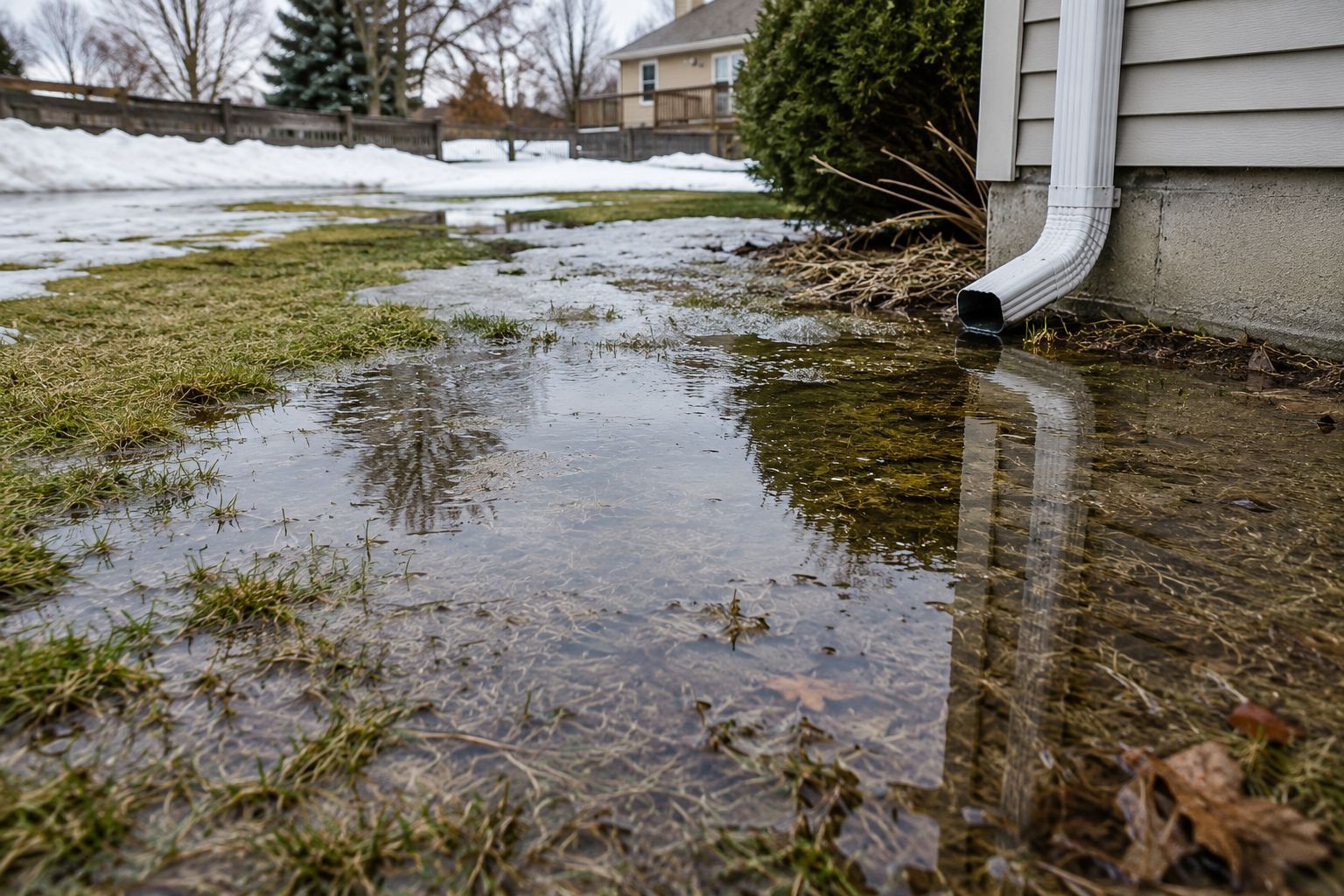
Downspouts that release a large volume of roof runoff right next to the house or into a low area overwhelm that spot and feed the pooling.
The common thread is that water is arriving somewhere and has no good way to leave. Fix where it goes, and the pooling stops, which is exactly what grading and drainage do.
Why Filling or Reseeding the Spot Doesn't Last
The natural first attempt is to deal with the soggy spot directly, dump in topsoil to fill the low area, or reseed the patch where the grass drowned. It rarely holds up, and it is worth understanding why.
The soggy spot is where the water ends up, not why it ends up there. If you fill a low area but the surrounding grade still channels water into it, the water just pools at the new surface or finds the next lowest point. If you reseed without fixing the wetness, the new grass drowns in the same standing water that killed the last. You are treating the symptom, the wet spot, while the cause, water with nowhere to drain, keeps operating.
A fix that lasts has to change where the water goes: regrade so it flows away, and add drainage to carry it off. Then the spot stays dry because water no longer collects there, and grass can actually grow. That is the difference between patching the puddle every year and solving it.
Tip: Go out during or right after a heavy rain and watch where the water actually flows and where it collects, that real-time picture tells you far more than the dry yard does. Note whether water runs toward the house, where the puddles form, how long they linger, and where your downspouts discharge. That map of how water moves through your yard is exactly what a drainage pro uses to decide where to regrade and where drainage needs to go.
How Grading Fixes the Flow
The foundation of solving a wet yard is grading, shaping the ground so water flows where you want it to, away from the house and off the problem areas.
The first priority is always the house: the ground should slope away from the foundation in all directions so water moves away from it, not toward it. Pooling near the house is both a yard problem and a risk to the foundation and basement, so correcting that slope matters most. From there, the yard is shaped to give water a continuous path toward where it should drain, eliminating the flat areas and reverse slopes that let it settle. Low spots that collect water are regraded or tied into a drainage path so they no longer act as bowls.
Done right, grading uses the simplest force available, gravity, to keep water moving off the yard on its own. A well-graded yard sheds water instead of holding it, which solves a great deal of pooling before any drains are even added. It is the backbone of a dry yard.
How Drainage Carries Water Away
Grading moves water to where it should go; drainage gives it somewhere to actually go, especially where regrading alone is not enough or the soil drains poorly. Together they handle the water for good.
Swales
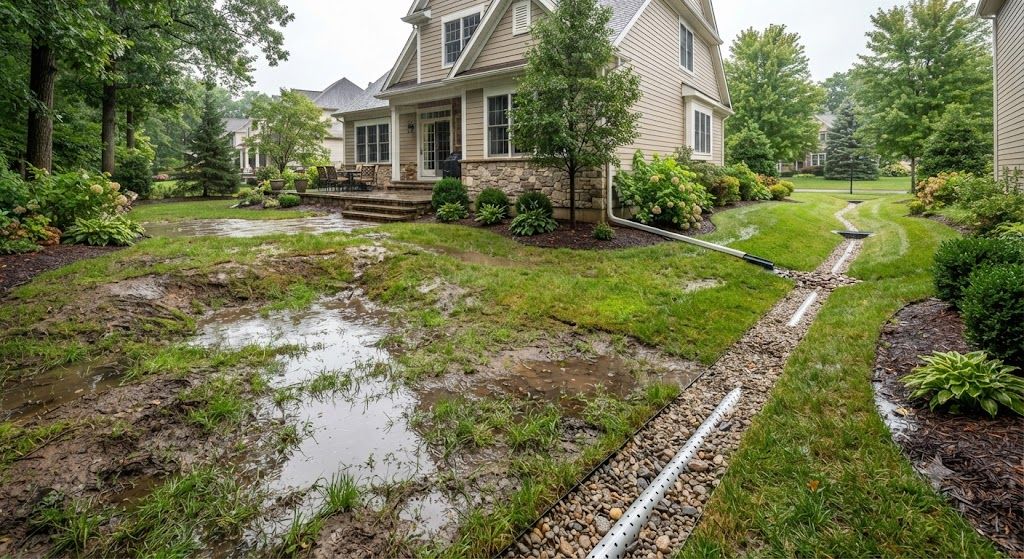
A swale is a shallow, graded channel that collects and carries water along a planned route to where it can safely drain, guiding surface water off the yard.
French drains
A French drain, a gravel-filled trench with a perforated pipe, collects water from a wet area and channels it underground to a drainage point. It is a common solution for a persistently soggy spot or an area where water needs to be carried off below the surface.
Downspout extensions and management
Carrying roof runoff well away from the house and away from low spots, instead of dumping it right at the foundation, removes a major source of pooling.
Catch basins and drainage outlets
In spots where water collects, a catch basin can capture it and route it through pipe to a safe discharge point away from the yard and house.
Which combination is right depends on the yard, how the water moves, where it pools, the soil, and where it can safely drain. The point is to give the collected water a reliable path off the property so it stops sitting in the yard. Paired with proper grading, drainage is what turns a chronically wet yard into one that dries out after the rain.
Warning: Don't ignore water that pools near the foundation or that you see running toward the house. Water collecting against the foundation can find its way into the basement and, over time, contribute to foundation problems, turning a soggy-yard nuisance into a costly structural issue. Grading that directs water away from the house should be the first priority of any drainage fix, and persistent water against the foundation is worth addressing promptly rather than living with.
Frequently Asked Questions
Why does my yard pool water after every rain?
Because the water has nowhere good to drain, so it collects at the low points. Usually the grade is too flat or slopes the wrong way, there's a low spot with no outlet, the clay-heavy soil absorbs slowly, or downspouts dump roof water in one place. The water arrives and can't leave, so it sits.
Why doesn't filling the low spot fix it?
Because the low spot is where the water ends up, not why. If the surrounding grade still channels water into that area, filling it just moves the puddle or sends it to the next low point. Lasting fixes regrade so water flows away and add drainage to carry it off, rather than patching the wet spot.
What's the difference between grading and drainage?
Grading is shaping the ground's slope so water flows away from the house and off the yard using gravity. Drainage is the systems, swales, French drains, downspout extensions, catch basins, that collect and carry water to a safe discharge point. Grading moves water to where it should go; drainage gives it somewhere to actually go.
Why are Buffalo-area yards so prone to this?
Heavy rains and spring snowmelt put a lot of water on the ground, and the clay-heavy soils common in the region absorb it slowly, so water sits on the surface. Combined with flat or poorly graded yards, that's a recipe for chronic pooling and soggy spots that don't dry out on their own.
Is standing water near the house a big deal?
Yes. Water pooling against the foundation can seep into the basement and, over time, contribute to foundation problems. That's why directing water away from the house is the top priority in any drainage fix, and why persistent water at the foundation is worth addressing promptly.
What's a French drain and when is it used?
A French drain is a gravel-filled trench with a perforated pipe that collects water from a wet area and carries it underground to a drainage point. It's commonly used for a persistently soggy spot or where water needs to be moved off below the surface, often alongside regrading and other drainage.
A Yard That Dries Out
Pooling water and soggy spots in your Buffalo yard are a sign that water is collecting with nowhere to drain, not a grass or soil problem you can patch away. Filling the low spot or reseeding never lasts because the water keeps coming back to the same place. The real fix is to correct the grade so water flows away from the house and the low areas, and add the right drainage to carry it off the property. Solve where the water goes, and the yard finally dries out after the rain instead of turning to swamp.
Stop the pooling by fixing where the water goes — Soggy spots and standing water mean your yard's grade and drainage are letting water collect with nowhere to drain, and filling the low spot never lasts because the water keeps coming back. With 9
years of experience, Braidich Landscaping
corrects grading and installs the right
yard drainage solutions
for properties across Silver Creek, New York, directing water away from the house and off the property for good. Reach out for a drainage assessment and get a yard that dries out after the rain.