Mulch Washing Away Down the Slope Every Spring? How to Make It Stay
October 22, 2026
Quick Answer: Mulch washes off a slope because it is the wrong type, spread too thick or too thin, and given nothing to catch against when snowmelt and spring rain run downhill. To keep it in place, choose shredded bark that knits together instead of round nuggets, spread it 2 to 3 inches deep in thin layers, rough up the soil underneath, and add edging or small barriers across the grade. Steeper banks need biodegradable netting or deep rooted groundcovers on top of that. A quick check after every heavy rain keeps small slips from turning into bare soil.
You spread fresh mulch along the front bank in May, and it looked sharp for about three weeks. Then came a week of hard rain, and now there is a brown fan of wood chips on the sidewalk, a bare stripe across the top of the bed, and a pile of mulch sitting against the driveway edge. Last April it happened too, right after the snow finally melted. You raked it back up, topped it off, and watched the same thing happen again.
It is easy to decide that slopes simply cannot hold mulch, or that you are buying a bad product. Neither is true. Mulch moves downhill because water is moving downhill, and most slope beds are set up in a way that lets that water pick the mulch up and carry it away. Change the setup, and the same bed can stay covered for the whole season.
This guide walks through why Western New York slopes are especially hard on mulch, which materials actually stay put, and how edging, soil prep, netting, and plantings work together to keep a bank covered.
Why Slopes Lose Mulch Faster Here Than Almost Anywhere
Mulch on a flat bed only has to sit there. Mulch on a slope has to resist gravity and moving water at the same time, and Western New York throws a lot of both at it.
Snowmelt Arrives All At Once
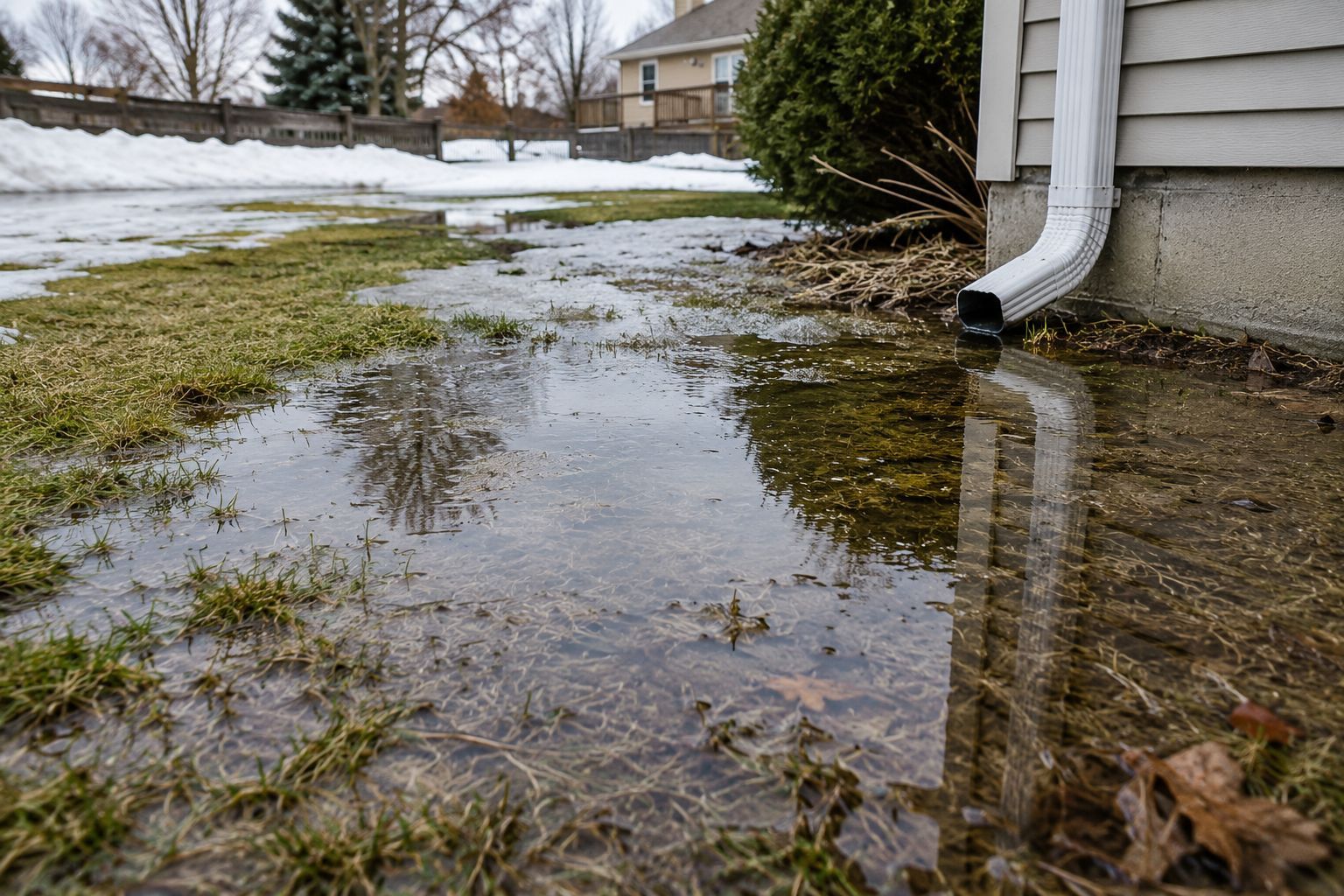
Lake effect storms bring heavy snow near Lake Erie, from Silver Creek through Hamburg and Orchard Park. Rapid melting over frozen soil sends water across the surface, carrying loose material away.
Clay Soil Sheds Water Instead Of Absorbing It
Heavy clay soil across the region drains poorly when wet and compacted. Water runs across sloped beds instead of soaking in, washing mulch downhill.
Spring Rain Follows Quickly
Early spring storms hit garden beds before plants develop leaves or strong roots. Without protection from raindrops and soil movement, exposed beds become vulnerable to erosion.
None of this means mulch cannot work on your slope. It means the mulch needs more help than a flat bed does, and the help has to be in place before the thaw, not after.
The Mulch Itself May Be the First Problem
Different mulches behave very differently on a grade, and the bag that looks nicest in the garden center is often the one that slides.
Mulches That Tend To Stay
Shredded hardwood bark, shredded cedar, pine straw, and mixed-size arborist chips interlock as they settle, forming a stable layer. Angular crushed stone also resists movement because its sharp edges grip together.
Mulches That Tend To Slide
Rounded bark nuggets roll easily, while finely ground mulch can wash away during heavy rain. Lightweight rubber mulch, smooth river rock, pea gravel, and loose straw also shift or scatter readily.
Soil type changes the picture a little. On clay, a lighter shredded hardwood usually works best, since heavy mulch pressed onto wet clay can smother the surface. Mixing a thin layer of compost into the top of the soil first gives the mulch something to bind to.
Tip: If you are not sure whether your current mulch is part of the problem, grab a handful and squeeze it. Mulch made of long shreds will hold together in a loose clump. Mulch made of round or very fine pieces falls apart in your hand, and it will do the same thing on the bank.
How Steep Is Your Slope, Really?
Many homeowners guess at their grade, and the guess matters because the fix changes with the steepness. You can measure it in a few minutes with two stakes, a string, and a level. Set one stake at the top of the slope and one at the bottom, run a level string between them, and measure how far the string sits above the ground at the lower stake. Divide that rise by the distance between stakes, then multiply by 100 to get a percent grade.
Under about 20 percent. This is a gentle slope. Good shredded mulch, proper depth, and simple edging usually hold it.
Between roughly 20 and 33 percent. Plain mulch will struggle here. Long fiber mulch plus netting, boulders, or low barriers across the grade is the safer plan.
Over about 33 percent. A bank this steep rarely keeps loose mulch at all. It does better with terrace walls, erosion blankets, or deep rooted plants doing most of the work.
Knowing which category you are in saves a lot of repeat effort. A bed that is really a 30 percent bank will not stay covered with a heavier coat of the same mulch.
Prepare the Soil So the Mulch Has Something to Grip
Mulch laid onto a smooth, hard, crusted surface acts like a sheet of paper on a slanted table. It slides as one piece. A little preparation makes a large difference.
Pull weeds, loose rocks, and old debris first. Then loosen only the top inch or two of soil with a rake or hand cultivator so the surface is rough instead of glazed. On a slope, you can also scratch shallow grooves across the grade, running side to side rather than up and down. Those small furrows slow water and give the mulch ledges to settle into.
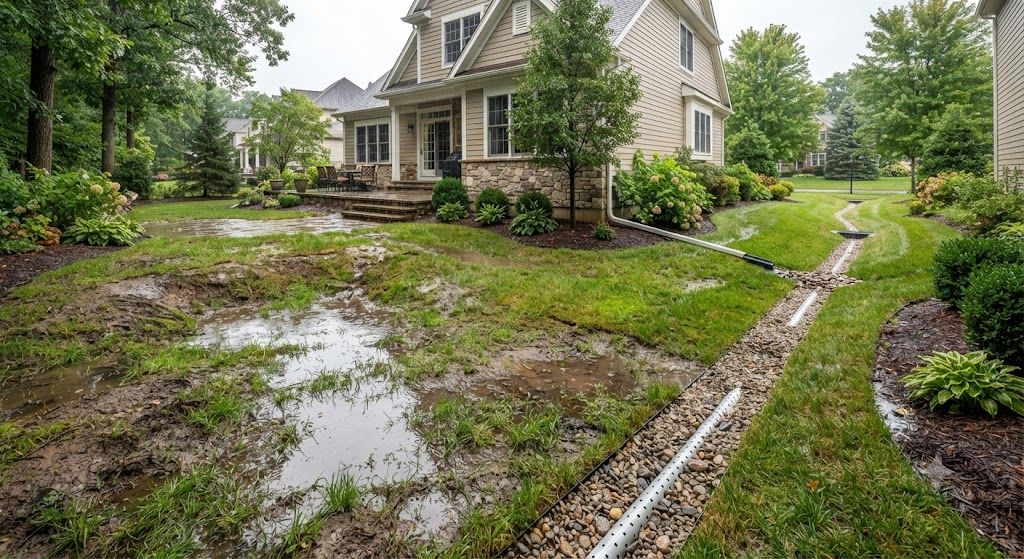
Leave existing drainage paths alone. If water already has a natural channel across the bed, cover it with mulch and the next storm will simply scour it back out. Leave the channel bare, or line it with river rock so water has a place to go that is not through your bed.
Warning: Do not use slick plastic sheeting or thin weed barrier under mulch on a slope. Wet mulch slides across plastic very easily, and the whole layer can slump downhill in one sheet after a heavy rain. If you want something under the mulch, use biodegradable jute netting that the mulch can grip.
Edging and Small Barriers Catch What Moves
Even well chosen mulch will creep a little. The goal is to catch it before it leaves the bed.
Start At The Bottom
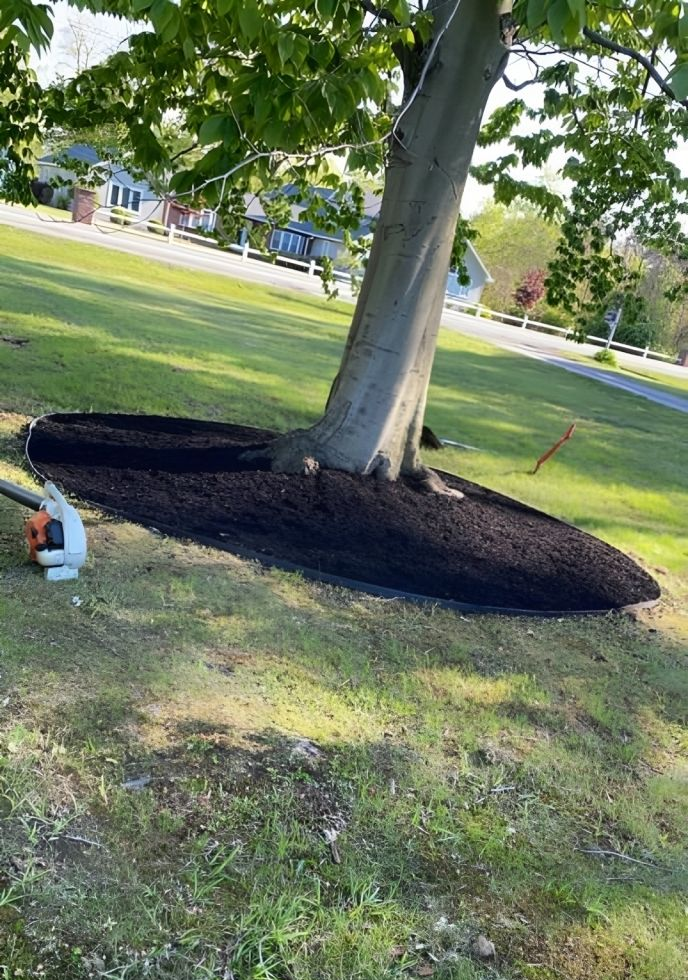
Install steel, stone, or timber edging along the bed’s lower edge, extending 4–6 inches underground and 2–4 inches aboveground. This barrier prevents mulch from spilling onto nearby walkways or driveways.
Add Barriers Across Longer Slopes
Place treated timbers, logs, or stone barriers every 3–6 feet along longer slopes. These small dams divide the incline into sections, slowing runoff and helping mulch stay in place.
Consider Terracing For Steeper Banks
For steep banks where barriers repeatedly fail, create level steps using stone or timber retaining faces. Each terrace slows water and holds mulch, though careful planning may be necessary.
Depth and Technique Matter More Than Volume
When mulch washes away, the usual reaction is to buy more and pile it on. That tends to make things worse.
Mulch works best at about 2 to 3 inches deep. Thicker layers lose cohesion and slump under their own weight, and a deep pile can keep roots from anchoring to the soil below. On a slope, apply it in two layers of roughly an inch each, and water lightly after each pass so the pieces settle and interlock before the next layer goes on. Finish with a deeper watering to set the whole layer.
Keep mulch pulled back from plants too. Leave 1 to 2 inches of open space around shrub stems and perennials, and 12 to 18 inches around the base of trees. Mulch piled against a trunk holds moisture against the bark and invites rot, and it adds nothing to slope stability.
Netting and Plantings Do the Long Term Work
For banks that need more than edging, there are two reliable layers to add.
Biodegradable Jute Netting
Roll jute netting over prepared soil, overlap edges by six inches, and secure with staples every 12–24 inches. Cover with mulch; the fibers eventually decompose as roots establish.
Groundcovers With Real Roots
Groundcovers provide lasting erosion control because their roots anchor soil more effectively than mulch. Creeping phlox, yarrow, wild strawberry, and ostrich fern work well on banks when planted properly.
Once groundcovers fill in, mulch becomes a supporting layer rather than the only thing keeping the bank covered. That is where you want to end up.
A Simple Seasonal Routine for Slope Beds
Even a well built slope bed needs a few minutes of attention at the right times.
In early spring, walk the bank after the snow is gone. Rake any mulch that has crept to the bottom back up the grade, and check that edging has not heaved out of line after the freeze and thaw cycles. After any heavy rain, take a quick look for new gullies or slumps, since small ones are easy to fix and large ones are not. In spring and again in fall, add a thin top coat of about an inch rather than a heavy new layer.
Liquid mulch binders are sometimes sold as a shortcut. They can help on very gentle slopes with little runoff, but they weaken after a few heavy rains, so treat them as a short term assist rather than a repair.
Frequently Asked Questions
Why does my mulch wash away every spring even though I add more each year?
Adding more does not change what is moving it. Spring snowmelt runs across frozen or saturated clay, and loose or rounded mulch is lifted right off. Fixing the mulch type, the soil surface, and the edging stops the loss. Adding extra volume usually just gives the water more to carry.
What type of mulch stays on a slope best?
Long fiber mulches such as shredded hardwood, shredded cedar, and pine straw lock together as they settle. Mixed size arborist chips also hold well. Round bark nuggets, fine ground mulch, and rubber mulch slide easily and are poor choices for a grade.
How deep should mulch be on a hillside?
Aim for 2 to 3 inches total, applied in two thin layers with a light watering after each. A thicker layer tends to slump and can keep roots from anchoring.
Can I use weed barrier fabric under the mulch to hold it?
Slick plastic or tight weave fabric usually makes sliding worse because wet mulch glides across it. Biodegradable jute netting gives mulch something to grip and breaks down naturally.
Is it better to replace mulch with plants on a steep bank?
On steeper banks, yes, at least partly. Deep rooted groundcovers hold soil in a way mulch never can. Many homeowners use both, with mulch protecting the soil while the plants fill in.
When is the best time to fix a slope bed in Western New York?
Late summer and early fall give new plantings time to root before winter, and getting edging and netting installed before the ground freezes means the bed is ready for the next thaw instead of reacting to it.
Set It Up Before The Thaw Arrives
A slope that loses its mulch every spring is not a lost cause. It is a bed that needs the right material, a rough surface to grip, something to catch what moves, and eventually roots doing the long term holding. The mulch is only sliding because water is sliding, so the fix works on the water as much as the wood chips. Put those pieces together before the next snowmelt, and the bank stays covered through the hardest weeks of the year.
Braidich Landscaping
has spent 9
years building slope beds around Silver Creek, NY, where lake effect snow and heavy clay send a fast sheet of meltwater across half frozen ground every spring. Measuring the grade first, then matching the
mulch, edging, netting, and groundcovers to it, is what separates a bank that holds from one that fans out onto the driveway. Setting the bed up before the ground freezes means it is ready for the thaw rather than reacting to it.