
Lawn Drowning After Lake-Effect Snowmelt? Why Drainage Comes Before Seed
August 8, 2026
Quick Answer: A lawn that stays soaked for days after snowmelt usually has a drainage problem, not a seed problem. Buffalo-area yards routinely absorb 85 to 100 inches of snow a season, and clay-heavy soil across Western New York cannot move that much meltwater fast enough once the ground thaws. Reseeding a wet, oxygen-starved yard just wastes seed, since roots need air pockets in the soil to establish, and saturated ground has none. Fix the water path first with grading, French drains, or catch basins, let the soil recover its structure, then seed once the ground drains within a normal window. Skipping that order is the single biggest reason spring reseeding fails around Silver Creek, Hamburg, and West Seneca.
You walk out to the yard in late March and the snowbanks are finally gone, but the grass underneath looks worse than the snow did. Boot prints fill with water. The low corner by the downspout hasn't been dry since February. A neighbor tells you to just throw down some seed and get on with spring, so you do, and three weeks later half of it never came up while the rest washed into the driveway during the next rain.
That sequence plays out across Western New York every year, and it isn't bad luck. It's a water problem being treated like a seed problem. Most homeowners never connect the two until a second spring goes the same way.
Why Snowmelt Hits Clay-Heavy Yards So Hard
Western New York doesn't get an ordinary spring thaw. Buffalo typically sees 85 to 100 inches of lake-effect snow in a season, occasionally well past that when a heavy lake-effect stretch sets up off Erie or Ontario. All of that moisture is stored as snowpack through the winter, then released over a matter of days once temperatures climb. The ground receiving that water is often still partly frozen at the surface, which means it can't absorb meltwater at anywhere near the rate it's arriving.
Frozen subsoil blocks percolation
Even when the top inch or two has thawed enough to look wet and muddy, the layer below can stay frozen for weeks longer. Water has nowhere to go but sideways and up, so it pools on the surface instead of soaking down to the root zone.
Clay compounds the problem after the ground opens up
Much of the soil across Silver Creek, Dunkirk, and the surrounding towns carries a heavy clay component left behind by glacial lake deposits. Clay particles are small and pack tightly, leaving little room for the air and water pockets that let a normal soil drain. Soils with high clay or fine silt content are especially prone to compaction, and compacted ground loses the ability to move air and water between the surface and the root zone. That combination, thawing from the top down while clay resists drainage from below, is why the same low spots flood every single year.
Winter compaction adds a second layer of resistance
Snow removal equipment, foot traffic on frozen ground, and even the weight of the snowpack itself press down on soil that has less structure to begin with once it's saturated. Surface algae or moss showing up in a wet corner is itself a visible sign of compaction-driven poor drainage, and it's exactly what turns up in the soggiest parts of a yard by April.
Why Seeding Before Fixing Drainage Fails
Grass seed germinates through a fairly narrow set of conditions, and saturated soil violates more than one of them at once.
Roots need oxygen, and flooded soil has none to offer
Waterlogged ground pushes air out of the pore spaces that would otherwise let roots breathe and stretch. Seedlings that do sprout in these conditions tend to stay shallow-rooted and weak, and existing turf in the same spot thins out for the same reason.
Seed washes and shifts before it can anchor
Any grading problem that lets water move across the surface will carry loose seed with it, concentrating it in low spots and stripping it from high ones. That's why homeowners often see thick, matted growth in one corner and bare dirt a few feet away after a spring seeding attempt.
The recommended seeding window for this climate falls in late summer anyway
The best stretch to establish or renovate a lawn here is mid-August through September, when soil temperatures have moderated, moisture is more dependable, and weed pressure is lower. Spring seeding in Western New York is already working against the calendar before drainage even enters the picture.
Put those three factors together and the pattern makes sense: seed thrown down on a yard still working through snowmelt is fighting oxygen deprivation, surface erosion, and a poor timing window all at once. None of that gets fixed by more seed. It gets fixed by giving the water somewhere to go.
Reading Your Yard's Drainage Problem
Before any fix gets designed, the actual water path needs to be understood, because "my yard floods" can mean several different things depending on where the water is coming from and where it's trying to go.
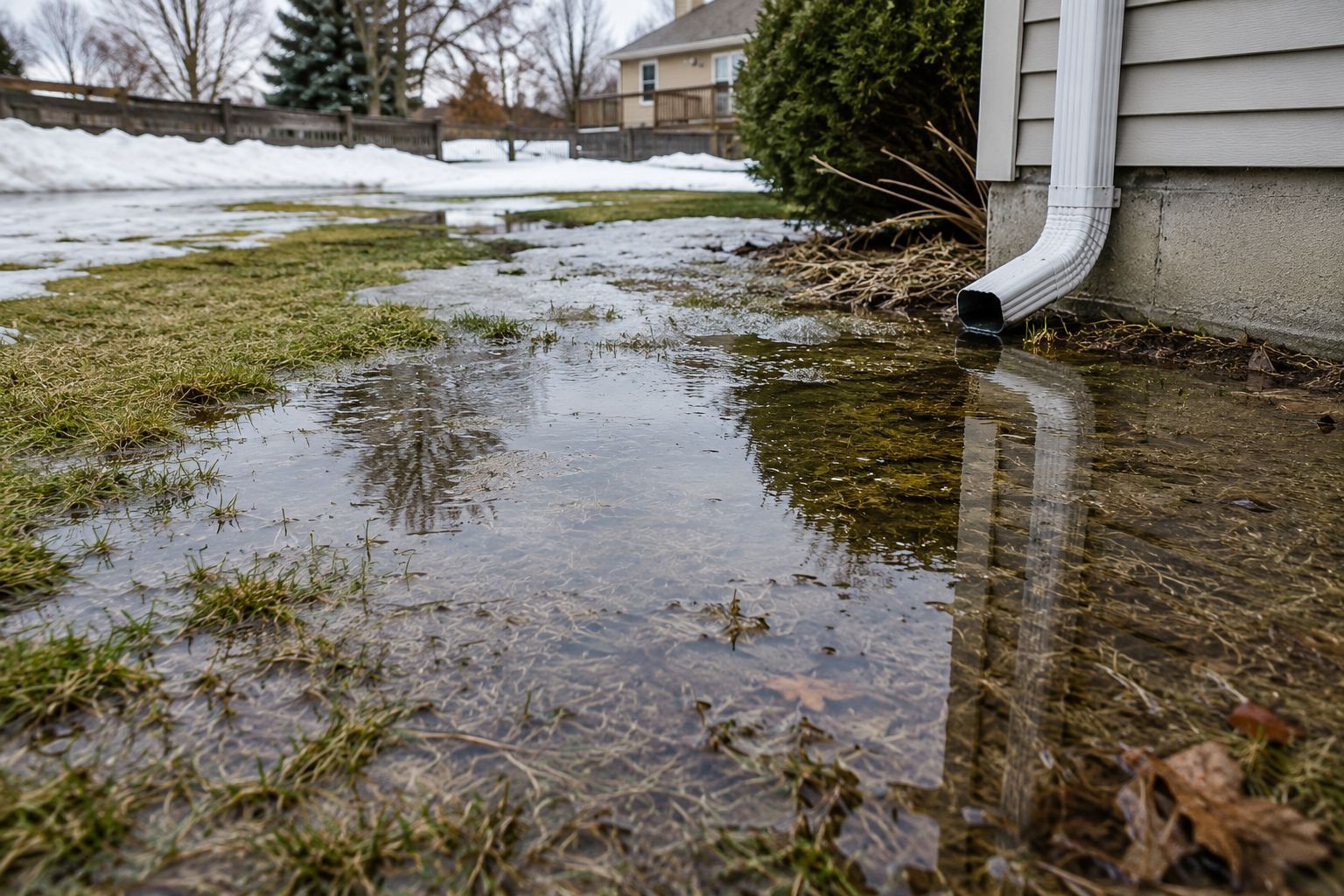
Standing water more than a day after melt or rain signals a grading or soil issue, not just a slow season. Water that clears within a few hours as the ground thaws further is closer to normal; water that sits for days in the same spot every year points to a low pocket that needs correction.
Soft, spongy ground you sink into when walking is a compaction signal. This is different from standing water. It means the soil itself has lost the structure to move water down, even if nothing is visibly pooled on top.
Downspouts and driveway runoff aimed at the yard turn a manageable amount of snowmelt into a concentrated flow. A lot of the worst spring puddling has less to do with the yard's natural drainage and more to do with roof and pavement water being funneled straight into one low corner.
Thinning grass, yellowing patches, or bare dirt that reappears in the same location year after year is the turf itself reporting a chronic saturation problem, since roots sitting in oxygen-poor soil weaken over successive seasons rather than recovering on their own.
Tip: Walk the yard the day after a thaw or rain event and mark the wet spots with stakes or flags before the water disappears. Drainage problems are far easier to diagnose while the evidence is still on the ground than from memory a week later.
What Actually Fixes Snowmelt Drainage
Once the water path is mapped, the fix depends on where the problem sits.
Regrading corrects the slope itself
A lot of pooling comes down to a yard that was graded flat or even slightly toward the house at some point, whether from original construction or years of soil settling. Adjusting the grade so water moves away from the foundation and toward a safe outlet solves the root cause rather than managing the symptom.
French drains handle water moving underground through saturated soil
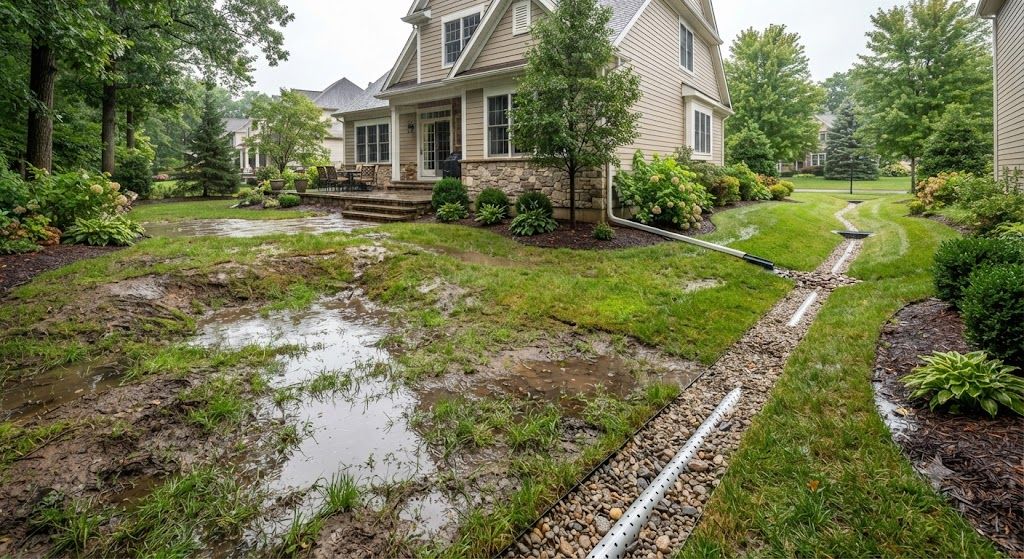
A perforated pipe set in gravel below the problem area intercepts water before it reaches the surface and carries it to a discharge point. That's particularly effective for the kind of slow, persistent seepage that clay soil produces during a multi-week thaw.
Catch basins and dry wells manage concentrated surface flow
Where water is arriving fast, from a downspout, a paved surface, or a low point that collects runoff from a larger area, a catch basin captures it at the point of entry and routes it into a piping system rather than letting it spread across the turf.
Soil amendment supports whichever structural fix goes in
Working organic matter into the top several inches of a compacted, clay-heavy area increases permeability so the soil itself can move water instead of relying entirely on buried pipe. That combined approach is standard practice for correcting compacted, poorly drained ground.
Warning: Patching a wet spot with topsoil or sand without addressing the grading or the buried water path underneath almost always fails within a season. The added material eventually compacts or settles into the same low point, and the pooling returns, often worse than before because the surface is now less even than it started.
Once the water has somewhere real to go, the yard gets a real chance to dry out on a normal schedule instead of staying saturated into May or June.
Timing the Fix Around a Western New York Spring
Assess as soon as the ground is workable, not once it looks dry
The wettest, muddiest weeks after melt are actually the best time to see exactly where a system needs to go, since the problem is visible rather than guessed at.
Install drainage work before committing to seed
Trenching, grading, and pipe installation disturb the soil surface, so it makes far more sense to do that work first and then prepare a clean seedbed once, rather than seeding twice.
Match seeding to the late-summer window
Given that mid-August through September is the more reliable establishment period for this climate, a spring drainage fix followed by a late-summer seeding often produces a better lawn than trying to force both drainage correction and germination into the same wet month.
Frequently Asked Questions
Why does my yard flood in the same spot every spring even though I've added topsoil there before?
Adding topsoil does not correct poor grading, compacted soil, or the underlying water path. The new soil eventually settles into the existing depression, allowing water to collect in the same location again each spring.
How long should I expect standing water to take to clear after a big snowmelt?
Healthy drainage should clear most surface water within several hours to a day. When standing water remains for multiple days, especially in clay soil, poor grading, compaction, or inadequate subsurface drainage may be responsible.
Can aeration alone fix a soggy yard, or do I need a drainage system too?
Aeration can reduce soil compaction and improve water movement near the surface, but it cannot correct poor grading or concentrated runoff. Persistent wet areas may require regrading, French drains, catch basins, or additional drainage improvements.
Is it worth seeding a wet spot in spring just to get some coverage before summer?
Seeding saturated soil usually produces poor results because excess water limits oxygen and weakens root development. Correcting drainage first and waiting for the late-summer seeding window generally provides better conditions for healthy, lasting grass establishment.
Does frozen ground make drainage problems worse than a normal rainy period would?
Yes. Partly frozen subsoil prevents meltwater from soaking deeply into the ground, causing water to remain near the surface. Low areas may therefore flood during spring snowmelt even when they handle ordinary seasonal rainfall adequately.
What's the difference between a French drain and a catch basin, and how do I know which one my yard needs?
French drains intercept water moving through saturated soil, while catch basins collect concentrated surface runoff from downspouts or low areas. The appropriate solution depends on where water originates, how it travels, and where pooling occurs.
Better Drainage Builds a Healthier Lawn Long-Term
A lawn that stays saturated after snowmelt needs more than another layer of seed or topsoil. Correcting the way water moves across and through the property gives turf a healthier foundation for future growth. With 9 years of experience, Braidich Landscaping in Silver Creek, NY understands how local clay soil, seasonal snowmelt, compacted ground, and uneven grading can combine to create recurring wet areas that continue damaging grass unless the underlying drainage conditions are properly addressed first.
Once grading, French drains, catch basins, or other appropriate drainage improvements correct the underlying water problem, the soil has time to regain structure and support stronger root development. Waiting until conditions are suitable for seeding also prevents new grass from struggling in saturated ground or washing away during runoff. Addressing drainage before
lawn restoration
creates a more dependable growing environment, reduces repeated spring damage, and allows the landscape to recover naturally as Western New York moves from snowmelt into the growing season.